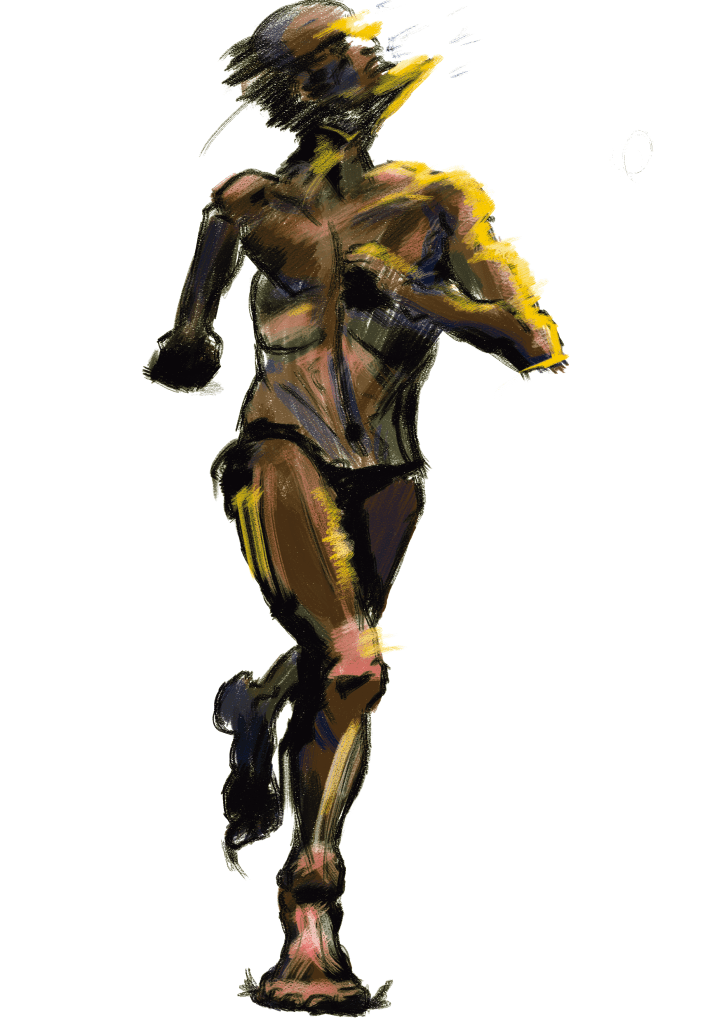
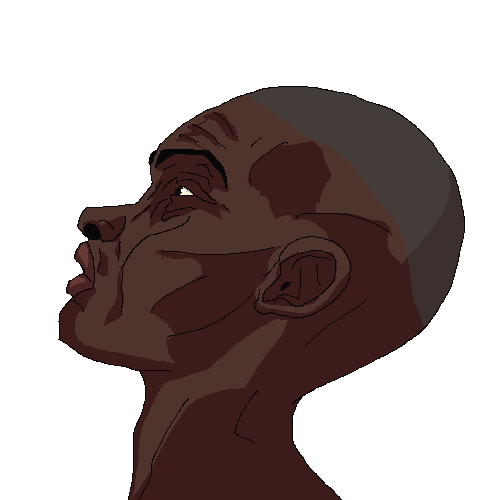
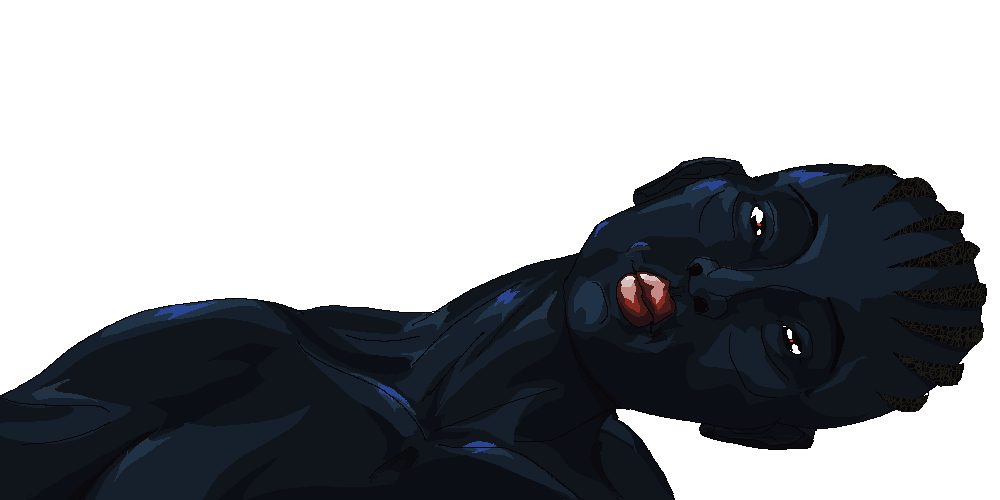
Readers ought to be familiar with Humans. They stand upright at five to six-and-a-half feet tall, are largely hairless, coloured red or brown, perhaps with a splash of blue or green about the eyes, and are of an averagely middling build.
They have an integumentary array that is not particularly impressive, especially when compared to many creatures of a similar size, and as such are quite vulnerable to the violence of the world in its elements and occupants. Their senses are likewise nothing special, nor are the bulk of their athletic capabilities, both, for the most part, sitting squarely at the median of their fellow Sapients.
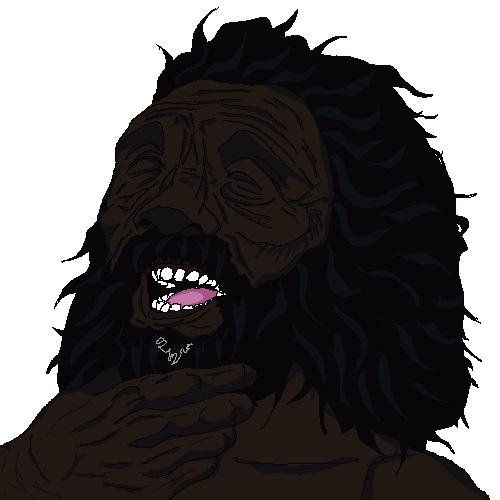
Even so, they are more than capable of surviving on their own terms, aided especially by their intrepid, omnivorous diet, although their small teeth and weak jaws mean they must soften a majority of their foods through cooking before ingestion.
They have managed to dominate not-insignificant swathes of their native land, Earth, but are inhibited by its wanton hostility of weather, both mundane and magical, with Earth itself presenting the highest percentage ratio of monsters to natural organisms of any of the seven pre-congregation masses.
Humans reach physical maturity at around twenty years, and have an uninterrupted lifespan of around seventy.
However, although those found on Seth may superficially resemble those common to the reader’s own world, they are set apart by a certain trait concealed deep within their flesh: their genetic ‘volatility’, and, by extension, their hyper-efficient immune systems.
Human DNA is especially receptive to change, meaning that they are in turn especially susceptible to mutation and godly enfleshment alike. An ill-practiced Human wizard is nearly twice as likely to suffer mutation as an equally competent Elf, say, but they are able to tolerate a significantly greater variety of godflesh tissue before their body begins to break down.
This also means that Humans’ propensity to monstrification is much higher than their fellow Sapients, with rates that are more in line with those of beasts and plants. This is because their bodies are more receptive to alteration, or, rather, lack the increased resistance that is usually to be expected of a Sapient species.
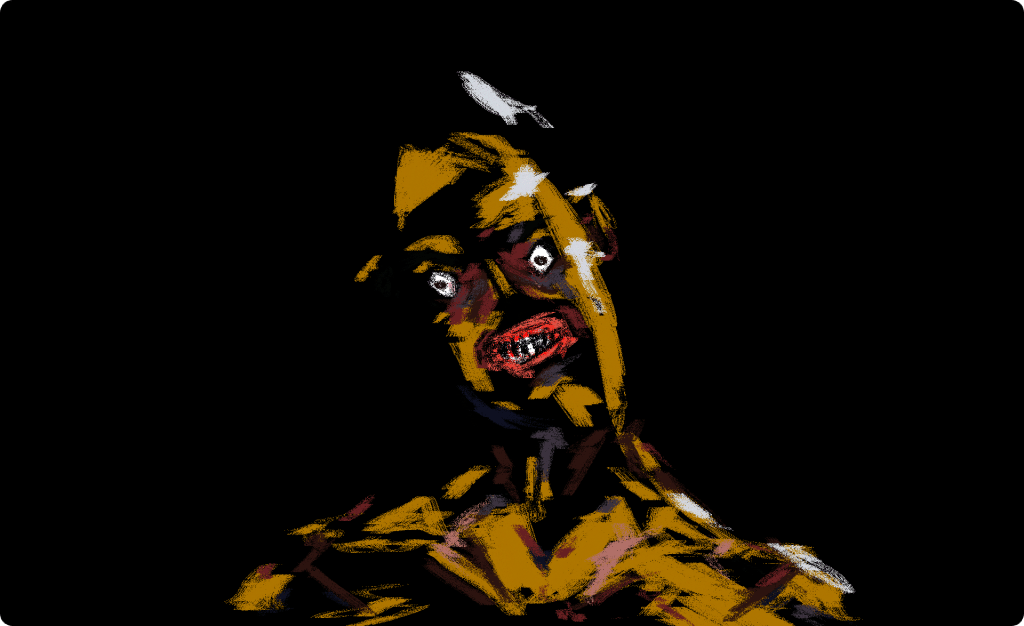
As such, in a given Human population, there will be an all but guaranteed suffusion of monstrous mutational strains, and particular success for any of the ‘doppelganger’-type, where monstrous individuals are outwardly indistinguishable, or at least close to it, from their peers and neighbours.
Although the above might make it seem a weighty crux, rather than select against volatility, Human evolution has sought to domineer it, contain it. Volatility means an unreliable resistance to disease, so Humans have an organ system not seen in any other sapient species, or, for that matter, beasts (excepting the basal, near-extinct apes found only deep in the jungles of Earth)- the ‘pudic system’.
The pudic system, otherwise known as ‘the sewer organ’, ‘the brine track’, ‘the filthduct’, ‘the thinnyliver’, ‘the purity ring’, and so on, is a network of vessels and nodes spread throughout the body, with a higher density in the torso and head.
These tissues act as a kind of internal ‘vaccine factory’, breaking down pathogens and releasing requisite immune cells so quickly and effectively that although Humans may become sick as easily as any other Sapients, they rarely ever die from pathogenic illnesses, and recover much faster.
The pudic system is able to remain a ‘distance’ from the rest of the body because it is, in fact, a relatively recent case of evolutionary symbiosis; a mutualist parasite fungus that has fully inculcated itself into the Human body plan, providing its gametes alongside the Human base, offering disease immunity in return for shelter and mobility.
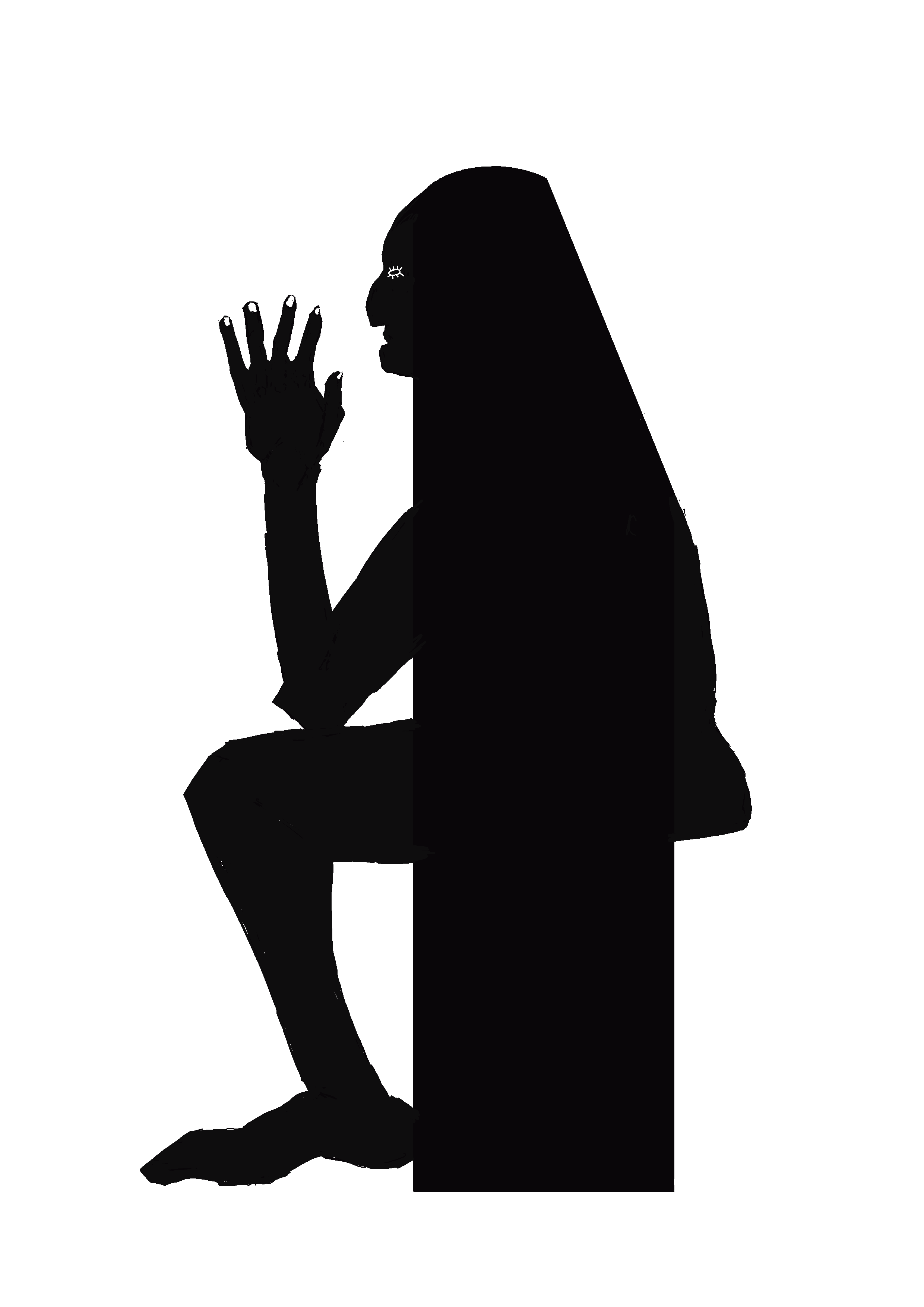
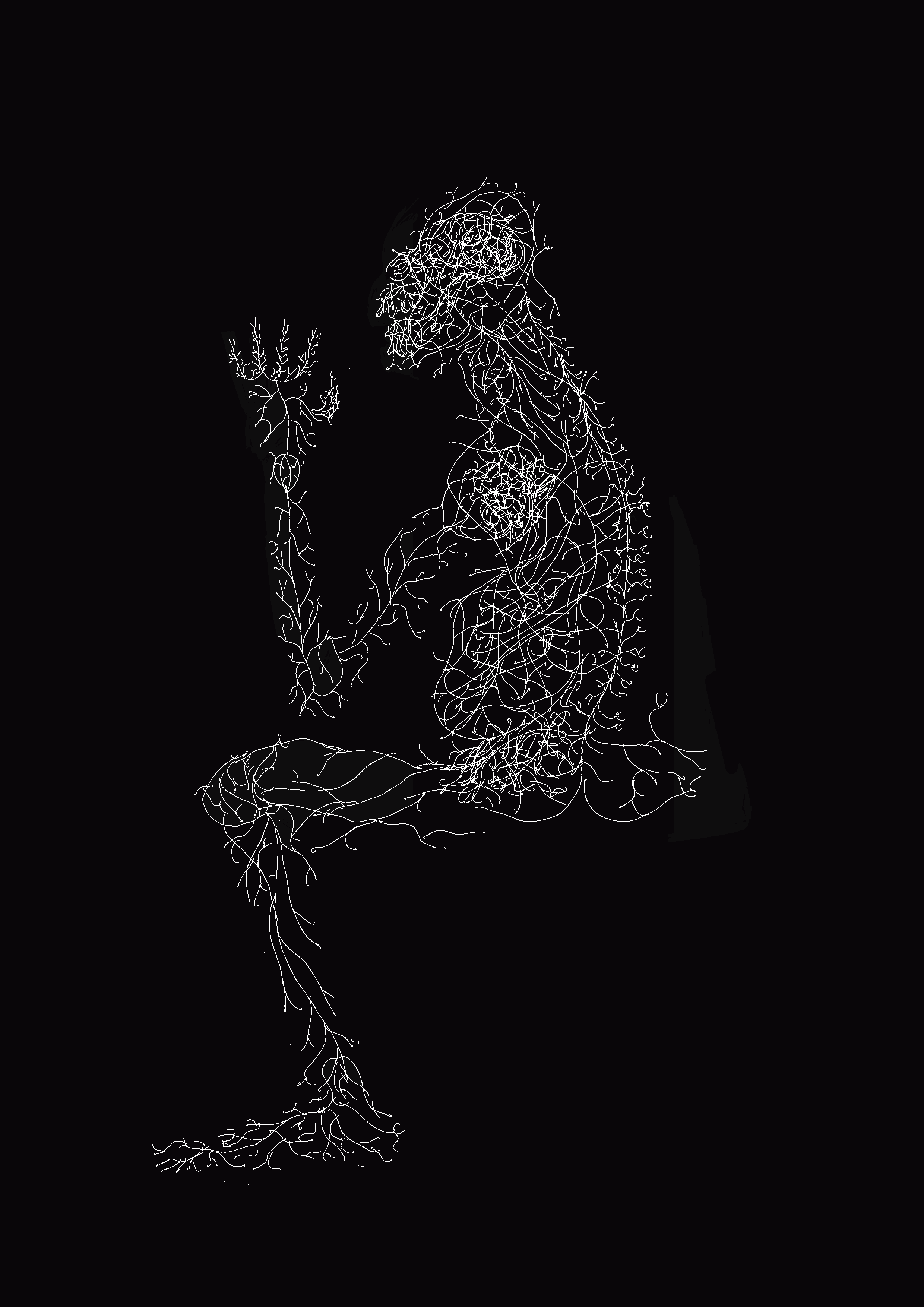
The operation of the pudic system is not without its physical cost. When activated or ‘called upon’, the network places enormous demand on the rest of the body, thoroughly sapping its resources, in order to produce a flood of appropriate antigens, which are passed in and out of the blood and tissues in the form of pudic fluid or ‘brine’, a substance differing in viscosity and colour (from runny to phlegmlike, wax-yellow to translucent white) depending on the exact illness, but always revoltingly bitter.
This internal process, the ‘first purging’ puts the individual in a highly vulnerable, immobile state, often attended by violent convulsions and even seizures, in which they can do little more than accept water. Delirium is something of a privilege, as purging is usually a painfully conscious experience. It can last between two and twenty-four hours.
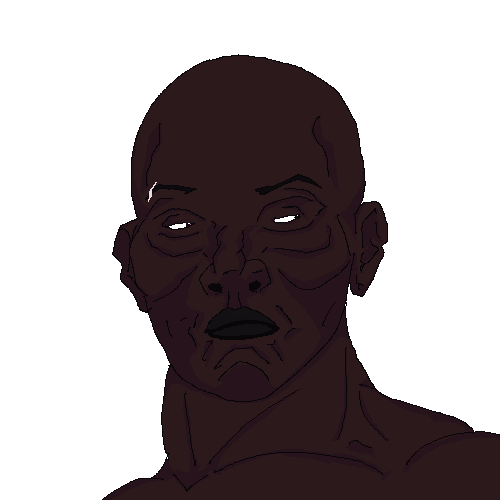
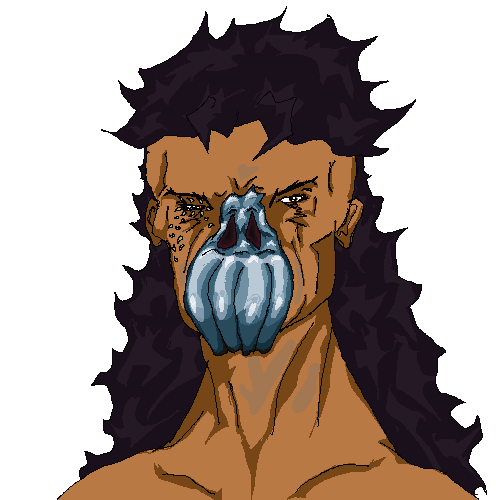
This is followed by a ‘second purging’, in which the pudic brine, having successfully swept up all pathogens, is ejected from every available orifice, most commonly the mouth, nostrils, anus, and ears, but possibly including the tear ducts, urethra, and nipples, and, in some extreme cases, sweat pores. The second purging is equally as, if not more, violent than its predecessor, but thankfully brief, usually only lasting an hour or two- although some unfortunates have been known to be in its throes for the better part of a day, in which case they must be forcefully hydrated so as not to succumb to death.
Purging is a universal Human experience, but owing to its crippling vulnerability and the extremely unhygienic nature of the ejected fluids, including the pudic brine itself, it is in most cultures a site of extreme shame, and in some a complete taboo. It should go without saying, but self urination and defecation are common during. It is a struggle to find a Human society that does not have a, to say the least, ‘complex’ relationship with purging, not least because of the enormous wave of endorphins that follow, and most will have dedicated spaces in which it may be carried out, overseen by only the most trusted or reviled in their communities.
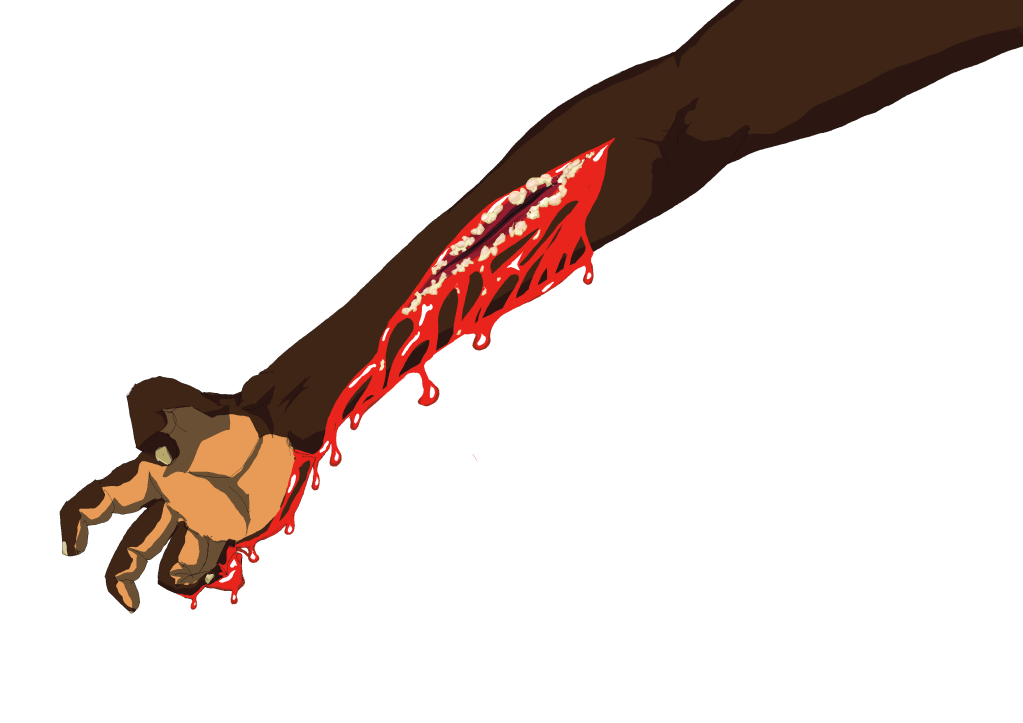
The pudic system is also activated in response to damaged tissues within and without the body. External wounds will be observed excreting a foamy, hydrophobic, quick-drying form of the brine that works to minimise bleeding, seal away wounds from infection, and encourage healing. After it has set, the now-dry eschar of pudic ‘cement’ can either be pulled off or allowed to fall according to fate, but since it is welded to the bloody scab beneath, the latter is recommended. Internal wounds undergo a similar treatment, helping to prevent bodily fluids from entering incompatible or inopportune spaces, and although external medicine is always preferable in such cases, the pudic system will give its host a potentially life-saving day or two extra time.
In order to stay effective and to grow, the pudic system requires its own energetic intake, with a marked requirement for salt. As such, Humans on Seth have double the sodium tolerance as those that would have been encountered by the reader, and their children display a love for salty foods over any other. Indeed, it is not uncommon to observe Human infants enthusiastically lapping at saltlicks or guzzling pickling solutions. That said, Humans, as ever, are unlikely to turn down something sweet.
Humans display a fantastic variety of individual body types and features, and have the most exaggerated difference in minimum and maximum heights and body masses of their fellows.
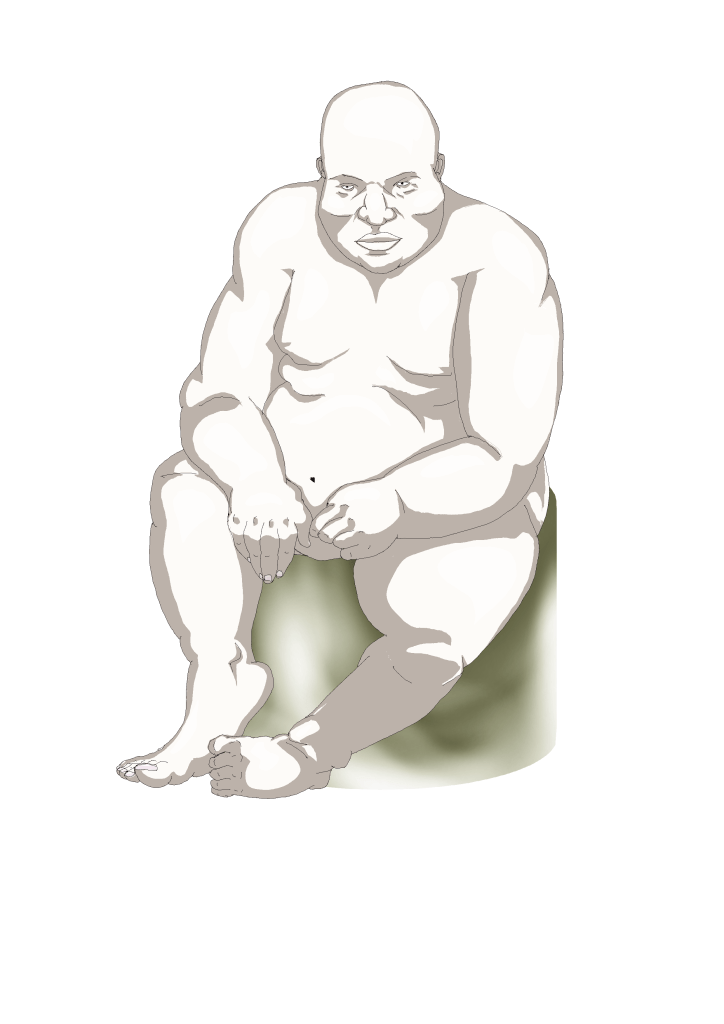
Sexual dimorphism is obvious even to other Sapients. Females tend to be shorter, and struggle to grow long hair on their faces and torso. Males have a narrower build, and generally cannot grow nearly as much mammary tissue as females, at least not without some concerted effort.
Otherwise, Human phenotypic variety, especially combined with their genetic volatility, makes it difficult to confidently assert any more binding rules, as there will always be a readily-available exception.
Humans make up for their environmental vulnerability through high reproductive rates. Fertility is stable year-round, mediated by females’ monthly menstrual cycle, and the relatively brief nine-month gestation period is quickly followed by readiness for another pregnancy.
Females undergo menopause, losing fertility, in late middle age, whereas males maintain steadily decaying, unreliable gametes through senescence, even unto death. Rates of twin and triplet births are higher than other Sapients, and although the action of the pudic system can cause growth complications in infants and children, its presence means that mortality as a result of disease is vanishingly rare.
Childbirth is by no means easy, and newborns are especially vulnerable, but rapidity of production and the impressive speed by which the female body repairs itself mean that even in cases of animal interference, neglect, famine, theft, monstrification, and so on, a replacement can quickly be generated.
Humans evolved bipedality to contend with the pressures of open, plains environments. As such, their stamina, especially for running, is at its higher end fairly remarkable. In a long-distance running race with competitors taken from the average of every Sapient species, the Human runner would win. This is ensured by a selection of traits, not limited only to muscular and skeletal structure, but going so deep as the skin itself.
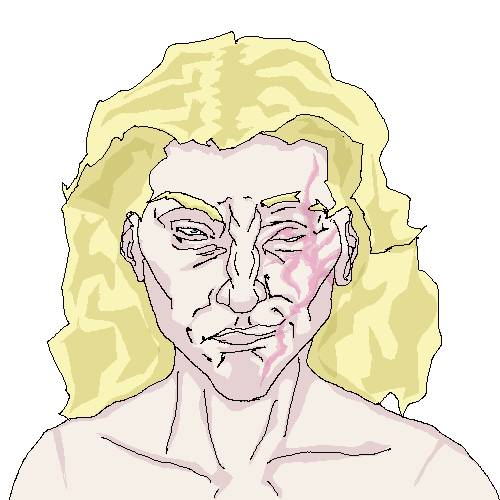
Said skin, on the soles of Human feet particularly, has great callousing potential, and with repeated stress will become all but completely sealed over by tough, numb extrusion. The healing factor provided by their impatient cells means that the appearance of a human individual can change drastically over their lifetime, their features spelling out a history of reaction to environmental challenges. Wind-beaten faces curl into squinting, polished masks, well-boxed ears close into lumpen fists themselves, the hands of one who uses them to work against the world become as hewn chunks of its own stony crust.
The nakedness of the Human form is not mere weakness. Their lack of hair provides opportunity for sweat, which serves to curb their body temperature during extended periods of exercise, the energy for which is provided by tissues ready and replete with stored glucose (Human capacity for obesity is another where they stand above), and momentum by a long, springy tendon drawn through the back of the heel, named for a hero unheard of on Seth, and the rhythms by a steady heart and expansive lungs.
This is not to say that they are locked to the ground. Their flexible arm joints, a hangover adaptation from a brachiating past, mean that they make for decent arborealists, especially with some training, and as a fortunate quirk of these land-oriented adaptations, Humans make for powerful swimmers, able, if compelled, to cross great distances of water, provided they do not have to descend too deep.
Humans, then, display a reliable and, most importantly, rapid, adaptability to their environment, and their propensity to reproduction means that new populations sprout and thrive at a significantly faster rate than their fellow Sapients. Their resistance to new diseases especially bears them an advantage, and is supported by an effective response to famine in the form of advanced fat storage, and the ability to cross long distances in a relatively short amount of time.
In short, Humans spread. They breed, and spread, and ooze the filthy brine of their pudic systems onto the dirt and into the rivers, poisoning the water. They die easily, but sprout afresh with the stubbornness of weeds. They run with ease to new spawning grounds, new dirt, new water.
They make easy friends of animals, perhaps an adaptation to account for their fragility.


Leave a Reply